Click here for this weekend’s readings.
In all of the readings today, we see the heart of God burning with desire for us. His heart is moved with pity for us because we are troubled and abandoned, like sheep without a shepherd. He desires that we might belong to Him and He to us. There are many different senses of belonging. We can think of belonging in terms of membership, or in terms of covenant. This is the word used in the Scriptures to describe the relationship that God wants with us. A covenant is an exchange of persons. I give my whole self to you, and you give your whole self to me—like a marriage. This is much different than simply a membership. Think about the differences between a Costco membership and a marriage. So often, though, you and I treat our belonging to God and our belonging to the Church more like a membership than a covenant. A membership demands very little of us; a covenant demands everything of us.
How do we make the transition from a membership mentality to a covenant mentality? The answer is LOVE. This has become such a trite phrase in the world today, that “God loves you.” We have lost the sense of the immense magnitude of that statement. The all-powerful God who created the universe—who does not need you—has freely chosen you, desires you, and moves toward you.
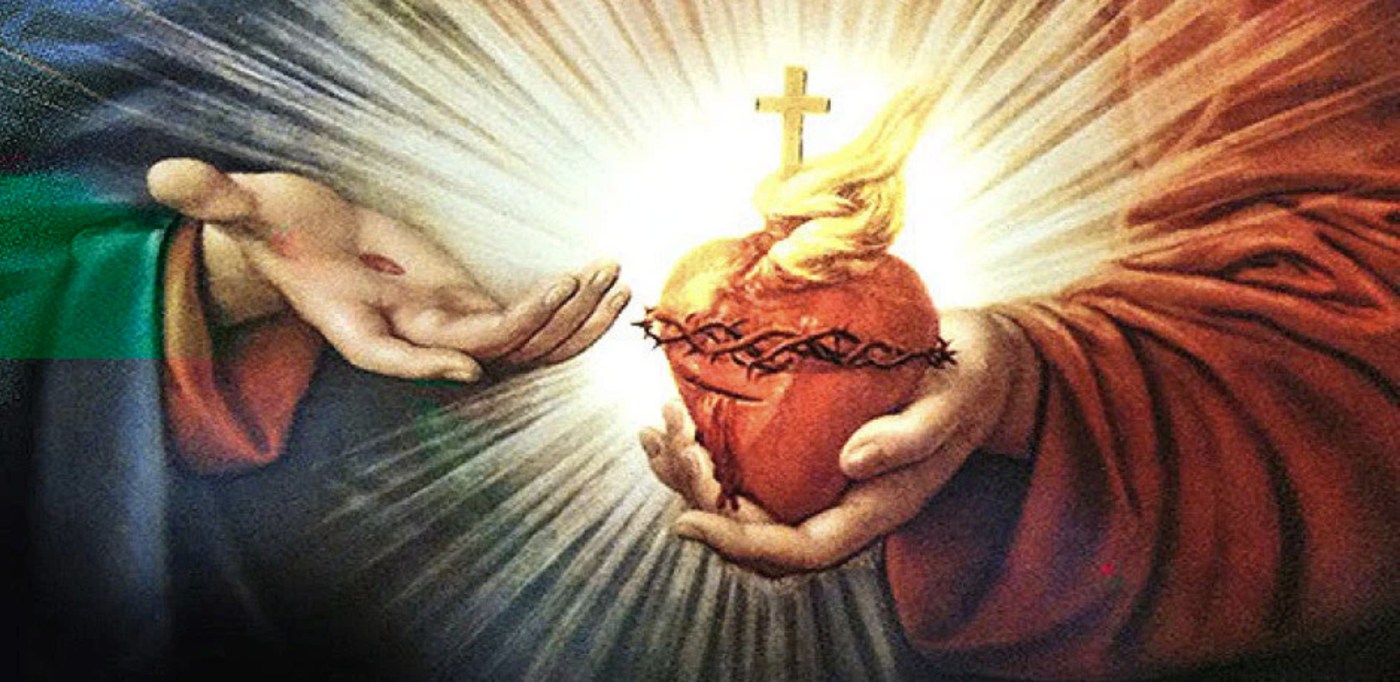
This past Friday, and during this whole month of June, we celebrate the Most Sacred Heart of Jesus. In this devotion, we see both the human and divine love of God in this burning heart that He presents to us. This devotion reveals to us that God’s love for us is not some bland, generic kind of love but rather is a love that burns with desire for us.
Very often, when I am hearing confessions, the Lord grants me a small share in His own fatherly heart, a heart that breaks with this recognition of, “Oh, you don’t know… You don’t know the love of God that is available to you—that’s why you’ve sinned in this way. You don’t know yet.”
In the first reading today, God wants the Israelites to open their eyes and see the evidence of His love for them. Just like those Israelites, you and I struggle with blinded eyes and hardened hearts, and we fail to recognize all of the ways that God is pouring out His love for us. When we endure sufferings, and losses, and sadnesses, we often misjudge the heart of God and we close ourselves from receiving His love. But the reality is that we have no idea of the evils that the Lord has saved us from, that He has not allowed to come our way. I am convinced that if we could pull back the veil between heaven and earth for just a split second and catch a glimpse of the way God gazes upon each one of us with such immense love, with such immense delight, we would give our whole life over to Him. At the end of our lives, when we are face to face with God and we finally know as we are known, I believe that we will have an experience of realization, an experience of: “Oh! Wow, I see it now… I see how much I missed my whole life long.” I think part of the pain of purgatory is the realization of the love of God that we didn’t recognize during our earthly life, and that will be a painful realization.
What is the greatest proof of God’s love for us? Saint Paul tells us in the second reading: “God proves his love for us in that while we were still sinners Christ died for us.” Even though we made ourselves God’s enemies and we continue to do so through our sin, He continues to give Himself, to pour Himself out from the Cross to the altar and in every confessional. You see, this “God loves you stuff” is not hippie business! Hippie love is cheap and empty. The love of God has gravitas because it cost God everything, and it will cost you and I everything, too.
We need to ask the Lord to help us open our eyes and soften our hearts to see, to sense the many ways He presents His love to us in every moment of every day, even though we don’t deserve it. God wants you and I to be the witnesses of His love in the world—just like those first apostles in the Gospel today—to attract the whole world into this kind of belonging to God. But we cannot do that until we have personally experienced and come to believe in the love that God has for us. Pope Saint Paul VI wrote: “Modern man listens more willingly to witnesses than to teachers, and if he does listen to teachers, it is because they are witnesses.” The only way that those first apostles were able to preach, and teach, and heal, and drive out demons was by the power of the burning love of God within them. They allowed themselves to experience the radical love of God beyond all telling, and they made a radical gift of their own love back to God. That is covenant. That is belonging.
So many of us, myself included, have a contraceptive mentality in our relationship with God. I’m only going to give this part of myself to you, God, but not all of me. I’m not going to trust you completely. I’m going to retain control. I’m going to take care of myself. Contraception is a problem in marriages, and it’s a problem in our relationship with God, too.
When we have a real, true experience of insight, of seeing and tasting God’s love for us, it changes everything, it changes our lives. We begin to subject every thought, every word, every decision to Him because we want to belong entirely to Him. Wherever you are on this journey, on this spectrum from membership to covenant, from slavery to sonship, from lukewarmness to burning, passionate love, I guarantee that you still don’t know the love that God has for you, not fully—I still don’t know the love that God has for me! I have tasted it—it’s the reason I gave my life to Christ as a disciple and as a priest. But I still have so much more to realize, so much more to receive from God, and so much more of myself to give back to Him.
Saint Francis of Assisi told his friars: “Hold back nothing of yourselves for yourselves, that He Who gives Himself totally to you may receive you totally!”
God loves you! Do you know how safe that makes you?
At the end of the Ignatian spiritual exercises—a thirty day long silent retreat—retreatants end the retreat—this time of wrestling, of giving and receiving—with this radical prayer called the “Suscipe Prayer,” a prayer of total surrender and abandonment to God. May you and I become more and more convinced of the love that God has for us so that we can make this prayer our own.
“Lord Jesus Christ, take all my freedom, my memory, my understanding, and my will. All that I have I cherish, you have given me. I surrender it all to be guided by your will. Your grace and your love are wealth enough for me. Give me these, Lord Jesus, and I ask for nothing more.”


Leave a Reply